Apple Watch Series
Apple Watch has spent ten years building toward a single competitive proposition: “good enough as a sports watch, the best smartwatch available“. No dedicated sports watch can match that. This page consolidates more than 250 Apple-related posts published on this site since 2015 and reflects the lineup, software, and sensors as of May 2026. Hardware expected in September 2026 is based on supply-chain reports and noted as such.
The 2026 Apple Watch Lineup
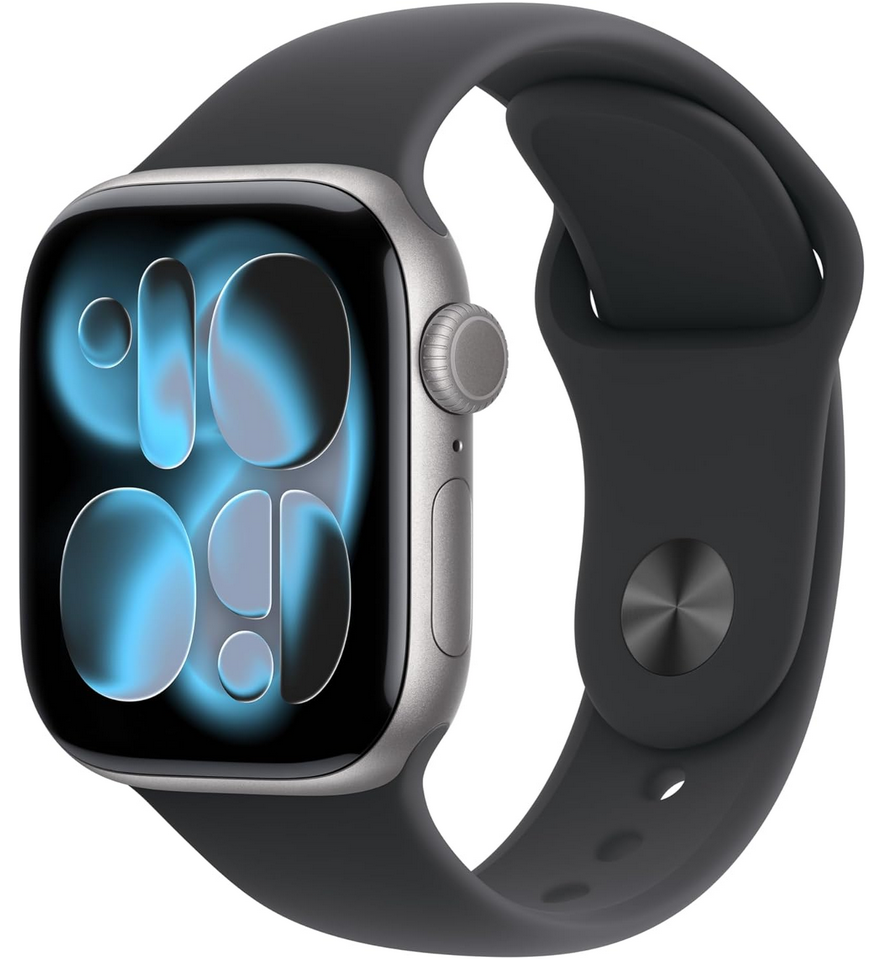
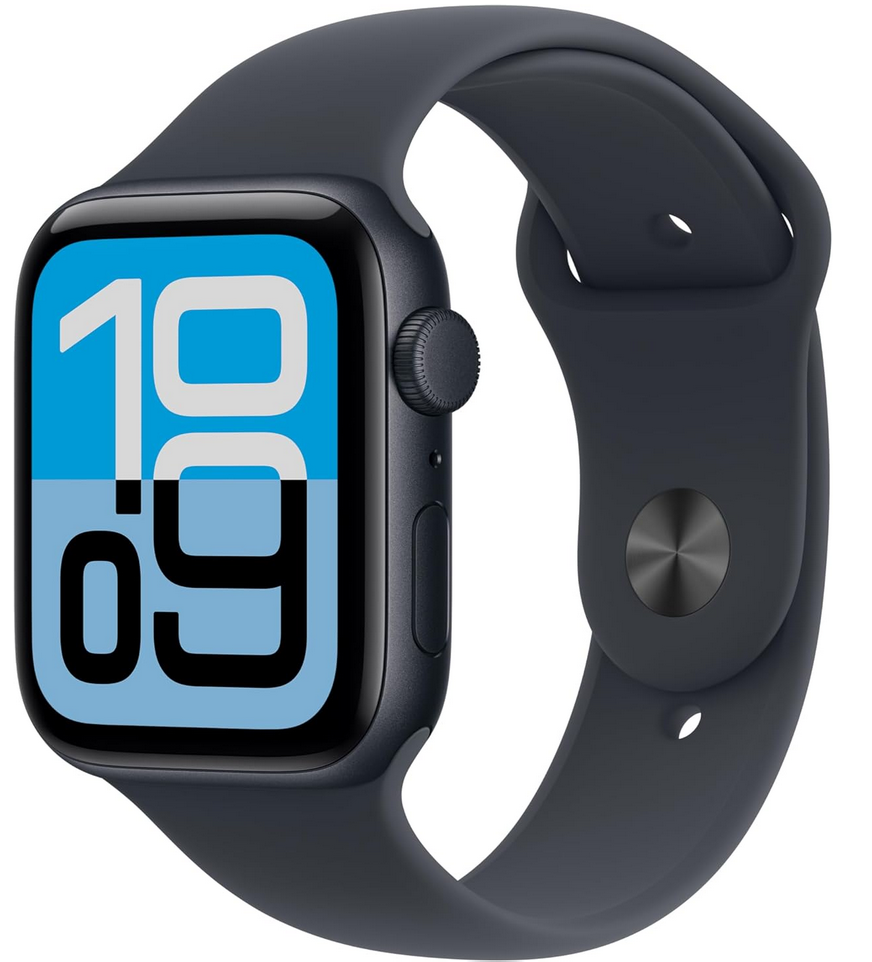
Three models are currently sold.
- The Apple Watch SE 3 starts at $249/£219: 40 mm or 44 mm aluminium case, always-on display, single-frequency GPS, 18 hours of normal use. ECG, skin temperature, dual-frequency GPS, and the Action button are absent.
- The Apple Watch Series 11 starts at $399/£369: 42 mm or 46 mm in aluminium or titanium, optional 4G-LTE, always-on display, single-frequency GPS, ECG, skin temperature, and blood oxygen (where available), 24 hours of normal use or 36 hours in Low Power Mode.
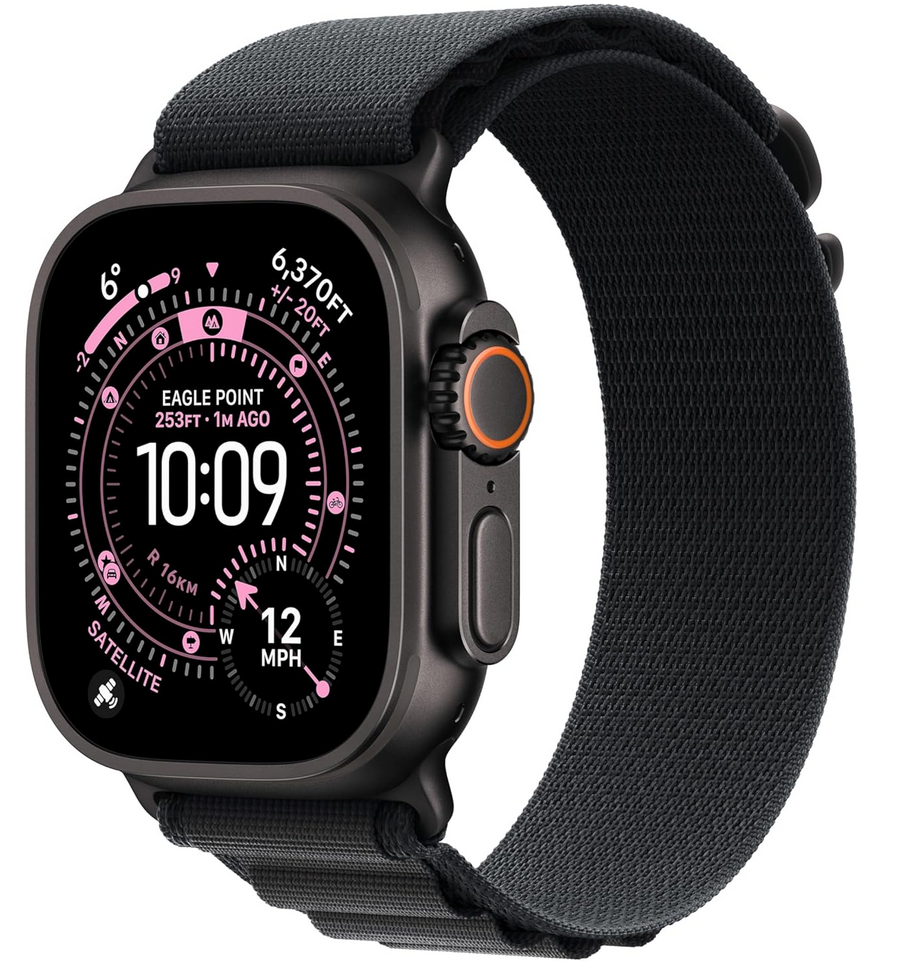
- The Apple Watch Ultra 3 starts at $799/£799: 49 mm titanium, dual-frequency L1 and L5 GPS, 5G+4G-LTE, Action button, depth gauge to 40 metres, MIL-STD-810H certification, satellite SOS and messaging via Globalstar, ECG, skin temperature, 42 hours normal use, 72 hours in Low Power Mode, and 14 hours of continuous GPS workout recording.

How Apple Differentiates the Range
Other than price, Apple uses six ways to differentiate its products.
- GPS. SE 3 and Series 11 carry single-frequency GPS; Ultra 3 carries dual-frequency L1 and L5. The difference matters in dense urban environments and under heavy canopy; on open roads, both tiers perform adequately.
- Battery. The figures need careful reading: Ultra 3 gives 42 hours in smartwatch mode, 72 in Low Power Mode, and 14 hours of continuous GPS recording. Series 11 provides 9 hours of continuous GPS; SE 3 provides 6 hours. The GPS recording figure is what matters for endurance athletes. Fourteen hours cover a marathon and a Half Ironman; they do not always cover a full Ironman without a charging plan.
- Sensors. SE 3 omits ECG and skin temperature. Series 11 and Ultra 3 carry both. Ultra 3 adds the depth gauge, MIL-STD-810H certification, and a dive rating to 40 metres.
- Display. All three have subtly different OLED always-on screens. Ultra 3 peaks at 3,000 nits and 49 mm; Series 11 at 2,000 nits and 42 or 46 mm; SE 3 at 1,000 nits and 40 or 44 mm.
- Connectivity. Ultra 3 supports 5G, 4G LTE, two-way satellite messaging, and SOS via Globalstar. Cellular Series 11 models carry 4G LTE. The GPS-only Series 11 and SE 3 GPS variants have no cellular connectivity. Satellite is a meaningful addition for an ultra watch: it lets it go off-grid with safety and with no subscription.
- Software. Core training features, Custom Workout builder, Workout Buddy, Training Load, VO2 max, heart rate zones, running dynamics, and multisport profiles run identically across all three models. Ultra 3 has exclusive watch faces and the Action button as a configurable trigger; the training software beneath is the same.
The Naming Conventions
The Series number is sequential, incremented annually from Series 1 in 2015. SE is Special Edition: a cost-reduced model on an older chip, updated less frequently. Ultra is a separate line introduced in 2022, on a larger case with the full sensor specification. There is no Apple Watch Pro. The Ultra name occupies that tier, at a size and price that makes it a distinct product rather than a premium Series variant.
The one anomaly is watchOS: Apple jumped from watchOS 11 to watchOS 26 in September 2025 to align version numbers with the calendar year across all its operating systems. The cadence, one major update each September, did not change.
Apple Watch as More Than Apple’s Health and Wearables Engine
Apple does not break out Watch revenue. Counterpoint Research and IDC estimate 40 to 45 million units shipped annually; over 250 million are in active use globally. By volume, it is the best-selling watch of any single manufacturer ever. The commercial significance runs deeper than shipments. Apple Watch keeps the customer in the iPhone ecosystem between upgrades, which has retention value that appears in no single revenue line. It is also the primary access point for health and fitness subscriptions, part of a Services segment that generated $96bn in fiscal 2025.
Fitness+ did not scale as Apple anticipated. The subscription architecture it built, interpreted health data delivered for a fee, points toward a more substantial product once blood pressure and eventually glucose arrive on the wrist with regulatory clearance. That product does not yet exist.
Apple’s position in health and wearables does not depend on the Watch remaining the dominant form factor. The health data, the FDA relationships, and the subscription infrastructure are not locked to the current hardware. If a ring, smart glasses, or another form follows, the platform survives. By comparison, Garmin’s business lacks that flexibility: the watch is much of what Garmin sells.
What the Accuracy Data Shows
GPS accuracy on the Ultra 3 is competitive with the best dedicated sports watches. A standardised 10-mile GPS test on this site scored it 90%, level with the Garmin Fenix 8 and one point behind the Forerunner 970. A controlled track test showed a 0.50% distance error in pure GPS mode, the best result in that test; track mode produced inconsistent lap-calibration results across multiple attempts.
A 2026 meta-analysis of 39 studies identifies Garmin and Apple jointly as the most accurate smartwatch brands for heart rate and activity. That finding is consistent with this site’s testing: Apple Watch has served as the reference device in more than 100 comparative reviews, reliable enough to measure others against. Optical HR on the wrist follows the same limits regardless of brand: resting and overnight heart rate are adequately captured; for interval training, a chest strap is more reliable. Apple records blanks in the HR track when the optical signal is uncertain, which produces cleaner data but a patchy-looking trace.
Software and watchOS
watchOS is updated every September, free, to all supported models simultaneously. The watchOS 26 support list runs from Series 6 and SE 2nd generation onward: five hardware generations. The current release is watchOS 26.5. The sport trajectory over eleven years: heart rate (2015), VO2 max (watchOS 4), ECG (watchOS 5), blood oxygen (watchOS 7), running dynamics and heart rate zones (watchOS 9), Training Load and sleep apnea detection (watchOS 11), and in watchOS 26 the biggest Workout app overhaul since launch: Custom Workout builder, Workout Buddy (Apple Intelligence coaching via Bluetooth headphones during runs, rides, HIIT, and strength sessions), and a redesigned navigation layout. Every annual update since watchOS 5 is covered in the index of links below.
watchOS updates are free and include new sport features. Garmin Connect+ is an optional paid subscription that many owners find difficult to justify. Whether Garmin’s analytics eventually deliver more training insight than watchOS is a question worth tracking; whether free represents better value than paid does not require tracking.
watchOS 27 was announced in June 2026, not supporting the original Apple Watch Ultra and Watch Series 8.
Apple Watch for Sport and Fitness
Apple Watch does not try to be the expert in any single sport. The approach is breadth over depth, with genuine achievement in multisport and adventure navigation, and equal weight given to general fitness: activity rings, Move, Stand, and Exercise targets, challenges, badges, and Fitness+ workouts are what most users interact with most often.
- Running and track. Running dynamics, heart rate zones, Custom Workout intervals, and Workout Buddy cover the needs of most recreational runners. Daily suggested workouts, automatic lactate threshold zone calculation, and heat acclimation are absent. Track mode is present, but it produced inconsistent lap calibration in controlled testing on this site.
- Cycling. For iPhone users, Live Activity mirroring to a handlebar-mounted phone makes the Apple Watch a practical cycling companion. Bluetooth power meter support, heart rate zones, and FTP estimation run natively. Smart trainer control, ANT+, and radar taillight support are absent.
- Triathlon and multisport. Automatic and manual transitions, per-leg metrics, and custom multisport profiles are all present. The GPS ceiling is the honest limit: 14 hours covers Sprint, Olympic, and Half Ironman; a full Ironman sits at or past that ceiling depending on pace.
- Swimming and adventure. Pool stroke detection and open water GPS tracking are both strong. The Oceanic+ app adds a full dive computer on Ultra 3. Adventure use is well supported through satellite SOS, offline maps, and retrace steps; topographic contours require WorkOutDoors from the App Store.
Recovery and sleep are recorded but come with an honest caveat: Apple Watch samples heart rate too infrequently overnight to produce the reliable nightly HRV average that dedicated recovery trackers use for readiness scoring. Sleep staging is good. The readiness inference from it is less precise than that of WHOOP or Polar.
The Medical and Regulatory Layer
Apple holds four FDA clearances: ECG, irregular rhythm notification for AFib, sleep apnea detection, and pattern-based hypertension notification. These are cleared medical tools that required clinical trials and regulatory submission. No dedicated sports watch manufacturer has matched that breadth.
Blood pressure monitoring with direct measurement is under FDA review and may arrive with the Series 12 and Ultra 4 in September 2026. Non-invasive glucose monitoring will not; engineering constraints place commercial readiness at 2028 at the earliest, and that estimate has slipped before.
The regulatory work Apple has been building since 2018 is a different race from GPS accuracy. Clinical validation pathways take years and require institutional relationships that hardware engineering alone does not produce. This site has been tracking the roadmap since the Rockley Photonics post in 2021; the link index below covers glucose, blood pressure, third-party integrations, and the competitive implications.
The Apple Ecosystem
Apple Watch does not function as a standalone sports device. Every standard workout and sensor reading is synced to Apple Health on the paired iPhone, where it accumulates over the device’s lifetime. Most major training platforms, including TrainingPeaks, Strava, and Final Surge, connect directly to Apple Health. Structured workouts from TrainingPeaks and Final Surge sync to the watch, delivering intervals with pace, power, or heart rate targets. Strava route navigation arrived in 2026. Completed workout data pushes out automatically. The athlete who has worn an Apple Watch for several years has a health record in Apple Health that is not tied to any specific watch model; upgrading hardware does not mean starting over.
During a workout, the native Workout app connects to Bluetooth chest straps, power meters, and headphones simultaneously. An ANT+ device pairing-in requires a bridging device (e.g., NPE), whereas heart rate broadcasting out to gym equipment requires a software bridge like the HeartBeatz app. The important architectural point is that third-party apps replace the native Workout app rather than adding to it. On Garmin, a developer can add a Train.Red muscle oxygen field into the native experience; on Apple Watch, a Train.Red user runs the Train.Red app, not Apple’s. The App Store is broader than Connect IQ because the developer incentive is larger; the trade-off is that Apple Watch users have to curate an app collection rather than getting most of what they need straight out of the box.
watchOS 26 supports models back to the Series 6, released in 2020, giving six years of software support.
What Comes Next
Series 12 and Ultra 4 are expected in September 2026. Supply chain reports point to a hardware redesign, including an eight-sensor rear array and Touch ID in the side button. Blood pressure monitoring is under FDA review and may ship this cycle. The futures cluster in the link index below covers the full roadmap: glucose, next-generation sensors, and what the competitive implications are for Garmin and the wider category.
Which Apple Watch
- SE 3 for the iPhone user who wants activity tracking and basic health metrics on a budget. ECG, skin temperature, dual-frequency GPS, and the Action button are the omissions; for everyday fitness use, none of them matters.
- Series 11 for most runners, cyclists, and triathletes who charge nightly and want the full sensor stack.
- Ultra 3 for multi-day events, trail, open water, diving, or anyone for whom 9 hours of GPS on the Series 11 is a genuine constraint.
The hard limits apply to all three: iPhone required, no Android, and no Apple Watch replaces Garmin for the athlete who needs topographic maps, multi-week battery life, or elite periodised training analytics.
